
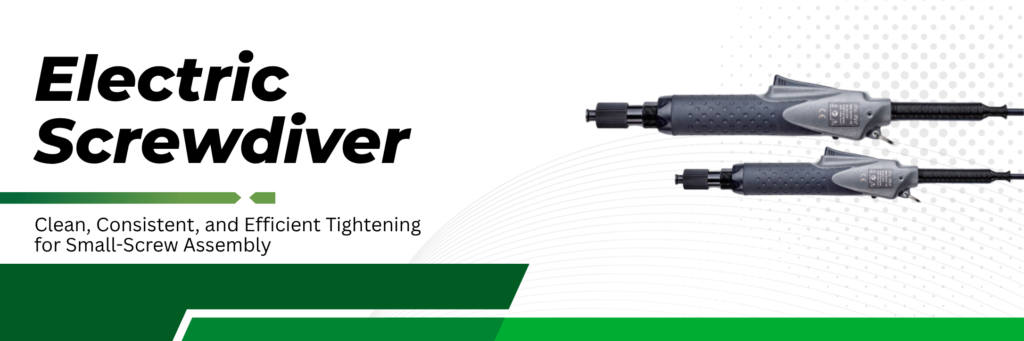
Clean, Consistent, and Efficient Tightening for Small-Screw Assembly
Electric screwdrivers are widely used in electronics, home appliances, automotive components, and other manufacturing processes where small screws must be tightened quickly and consistently.
Compared with manual screwdrivers, they reduce operator effort, improve cycle time, and provide more stable tightening performance across repetitive assembly work.
They are particularly suitable for low- to medium-torque applications where cleanliness, quiet operation, and ease of integration are important. Because electric screwdrivers do not require compressed air, they can also help reduce noise, simplify workstation installation, and avoid the pressure fluctuations that can affect pneumatic tools.
In high-volume manufacturing, even a simple screwdriving process can create quality problems when tool speed, torque, or operator technique is inconsistent. Electric screwdrivers help standardize the process by delivering controlled rotation and repeatable shutoff across thousands of fastening cycles. They are commonly used for:
- Electronics and electrical assemblies
- Home appliances and white goods
- Automotive interior and component assembly
- Plastic housings and molded parts
- Control panels and switchgear
- Medical and precision equipment
- General small-screw production
Their compact size and relatively low weight also make them suitable for bench assembly, suspended workstations, and applications requiring frequent tool handling.
Two Levels of Tightening Control
Electric screwdrivers can be divided into two main categories based on the level of process control required.
Electric Shutoff Screwdriver
A clutch-controlled electric screwdriver stops when the preset torque is reached. It provides a practical and economical solution for repetitive assembly where consistent torque is required but full tightening data is not necessary. This type of tool is commonly used for standard production fastening, especially where joint conditions are stable and the process can be validated through periodic torque checks.
Electric Transducerised Screwdriver
A transducerised electric screwdriver directly measures torque during tightening and uses an electronic controller to monitor the complete fastening process. Depending on the system, it can evaluate torque, angle, time, speed, and tightening curves while recording the result of each cycle.
This makes it suitable for quality-critical applications requiring process verification, traceability, error detection, and integration with production control systems.
Advantages of Electric Screwdrivers
Electric screwdrivers offer several practical advantages for small-screw assembly:
- Consistent tightening speed and torque
- Lower noise than many pneumatic tools
- No compressed-air supply required
- Reduced operator fatigue
- Clean operation without air exhaust
- Easy installation at assembly workstations
- Suitable for automated screw-feeding systems
- Available with basic clutch control or full electronic monitoring
Their speed can also be selected according to the application. Higher speeds improve cycle time, while lower speeds may provide better control for delicate plastics, small threads, or joints susceptible to cross-threading and damage.
Selecting the Right Electric Screwdriver
Tool selection should not be based on torque range alone. The screw size, joint material, thread type, production cycle, access condition, required accuracy, and quality-control requirements must all be considered.
For standard assembly where the main objective is repeatable tightening at an economical cost, a clutch shutoff screwdriver is often sufficient.
For critical joints where every tightening result must be verified, stored, or linked to a product serial number, a transducerised screwdriver is the better choice.
Proper application testing remains essential because the final joint condition is influenced by friction, screw quality, material variation, rundown characteristics, and the stiffness of the assembly.
Explore Our Electric Screwdriver Solutions
[ Electric Shutoff Screwdriver ]
Reliable clutch-controlled tightening for efficient and repeatable production assembly.
[ Electric Transducerised Screwdriver ]
Advanced tightening control with direct torque measurement, process monitoring, and traceability.
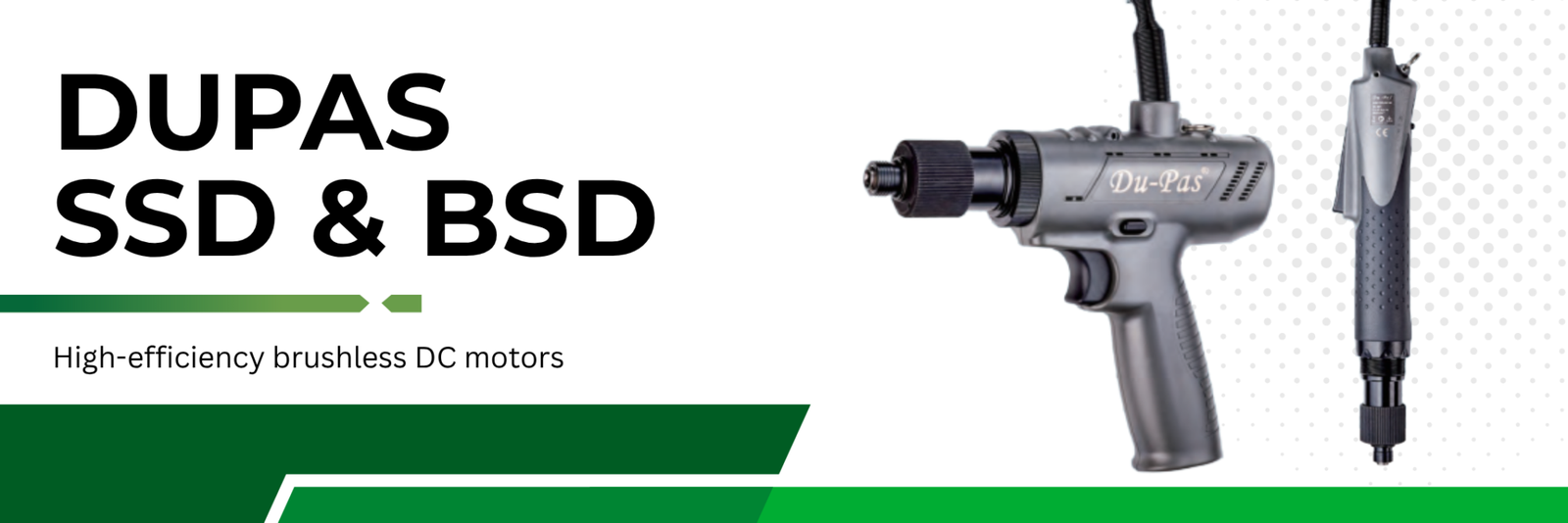
Electric Shutoff Screwdriver
Reliable Torque Control for High-Volume Assembly
Electric shutoff screwdrivers are designed for repetitive assembly operations where consistent tightening quality and operator productivity are essential. Using a precision mechanical clutch, the screwdriver automatically stops once the preset torque is reached, delivering repeatable tightening while reducing dependence on operator technique.
Compared with manual screwdrivers, electric shutoff tools improve productivity and reduce operator fatigue. Compared with conventional electric drivers without an automatic clutch, they provide significantly more consistent torque control, making them suitable for production environments where thousands of screws are tightened every shift.
At NMS, we offer the Dupas SSD and BSD Series of brushless electric shutoff screwdrivers, providing reliable fastening solutions for electronics, home appliances, automotive components, electrical assemblies, and precision manufacturing.
Automatic Shutoff for Consistent Tightening
The defining feature of an electric shutoff screwdriver is its automatic clutch mechanism. As the screw reaches the preset torque, the clutch disengages and immediately stops power transmission to the bit. This prevents additional torque from being applied to the fastener, helping reduce the risk of stripped threads, damaged plastic housings, or inconsistent clamp loads.
Because every tightening cycle stops at the same clutch setting, shutoff screwdrivers provide excellent repeatability for production assembly while remaining simple to operate and maintain. For manufacturers requiring reliable fastening without the cost and complexity of a transducerised system, a clutch shutoff screwdriver offers an excellent balance between quality, productivity, and investment.
Dupas SSD & BSD Series
The Dupas SSD and BSD Series are built around high-efficiency brushless DC motors, providing longer service life, lower maintenance, reduced heat generation, and improved energy efficiency compared with conventional brushed motors.
The catalog also highlights overload and overcurrent protection to enhance reliability in continuous production. Across the complete product range, Dupas offers torque capacities from approximately 0.03 Nm up to 18 Nm, covering applications from miniature electronic screws to larger industrial assemblies. Various speed options allow engineers to optimize both production cycle time and tightening control for different screw sizes and joint materials.
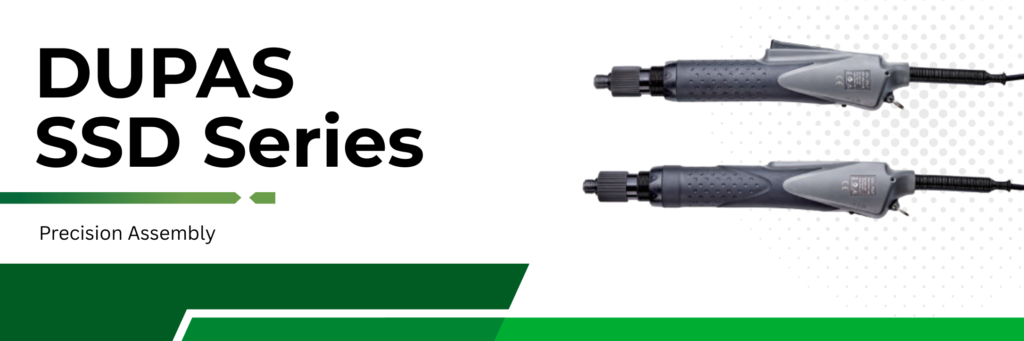
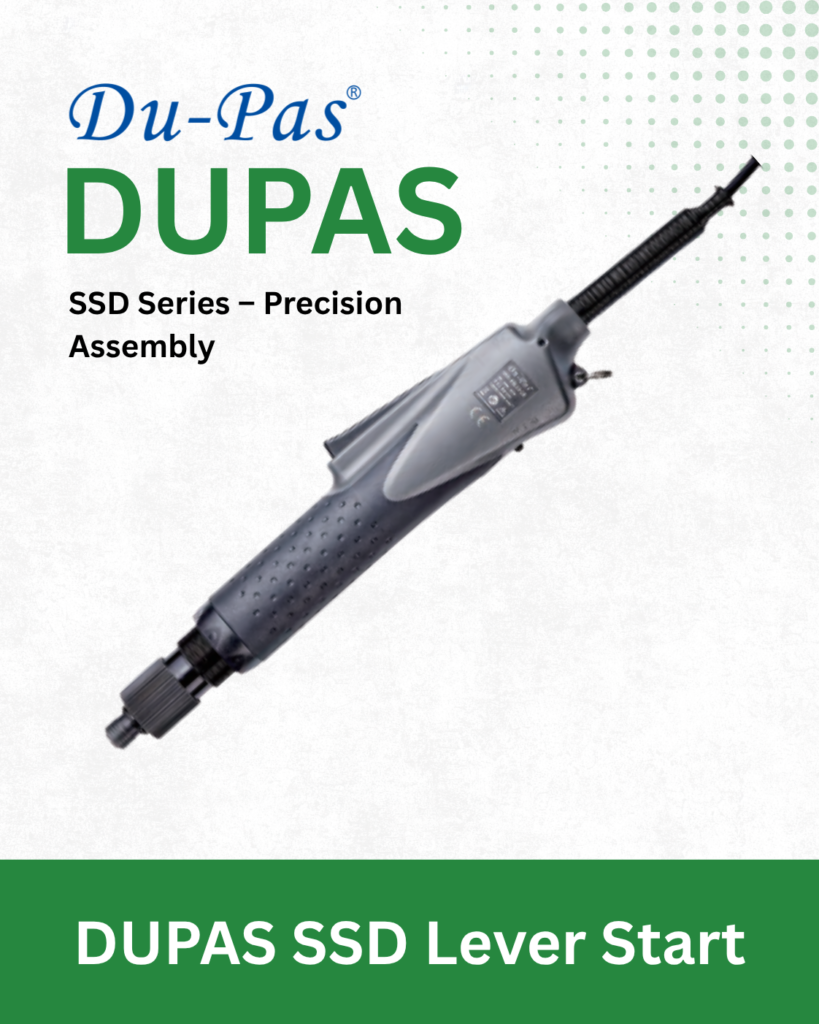
SSD Series – Precision Assembly
The SSD Series is designed primarily for small-screw assembly where lightweight handling, low torque, and excellent operator comfort are required. Key features include:
- Torque range from 0.03 Nm
- ESD-safe housing for electrostatic-sensitive environments
- Soft-start function
- Adjustable speed
- Brushless motor
- Low heat generation
- Compact inline design suitable for suspended workstations
Typical applications include:
- Consumer electronics
- Medical devices
- Precision instruments
- PCB assembly
- Electrical components
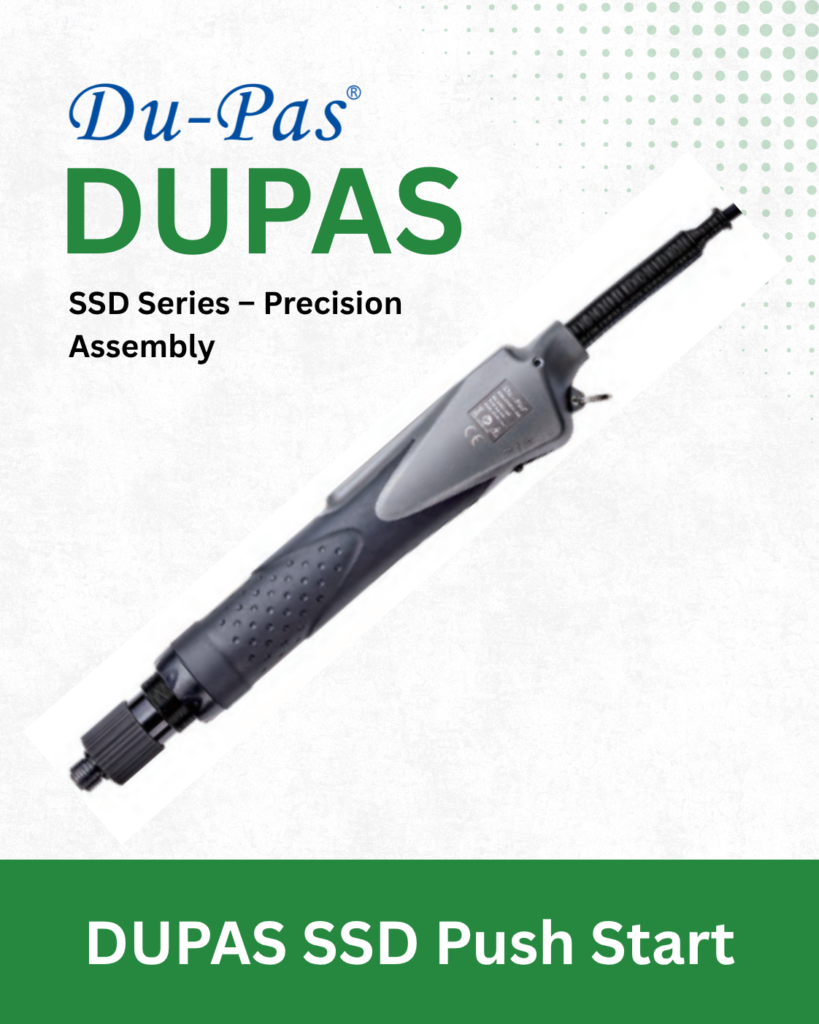
BSD Series – Higher Torque Industrial Assembly
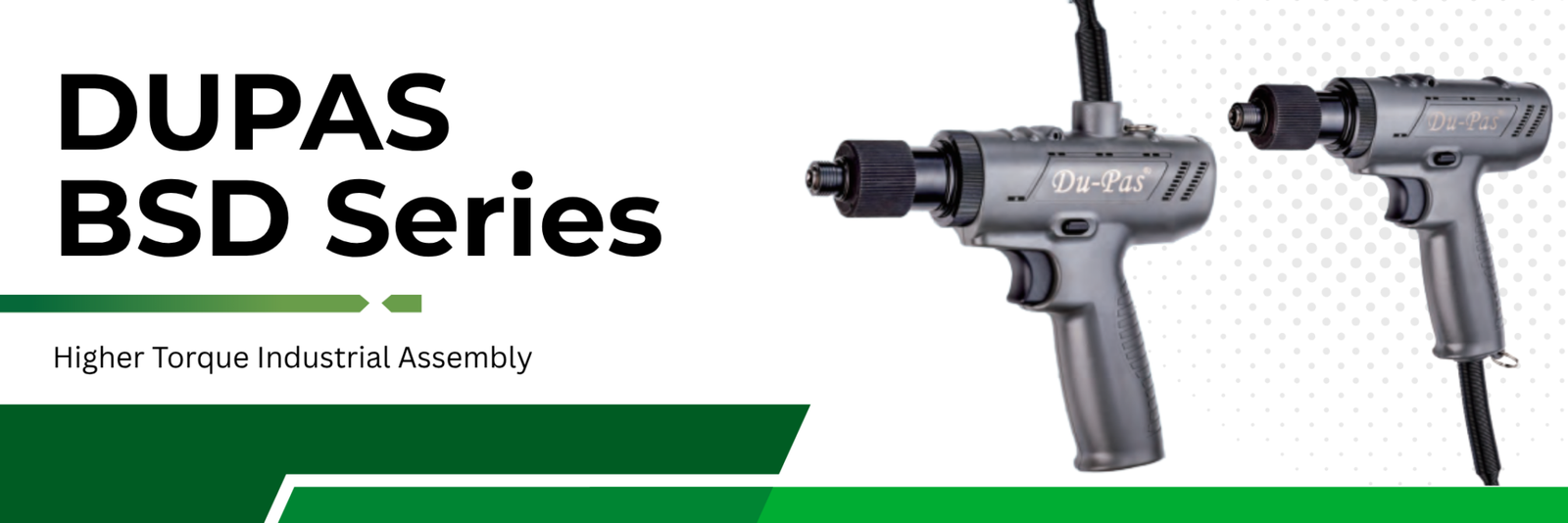
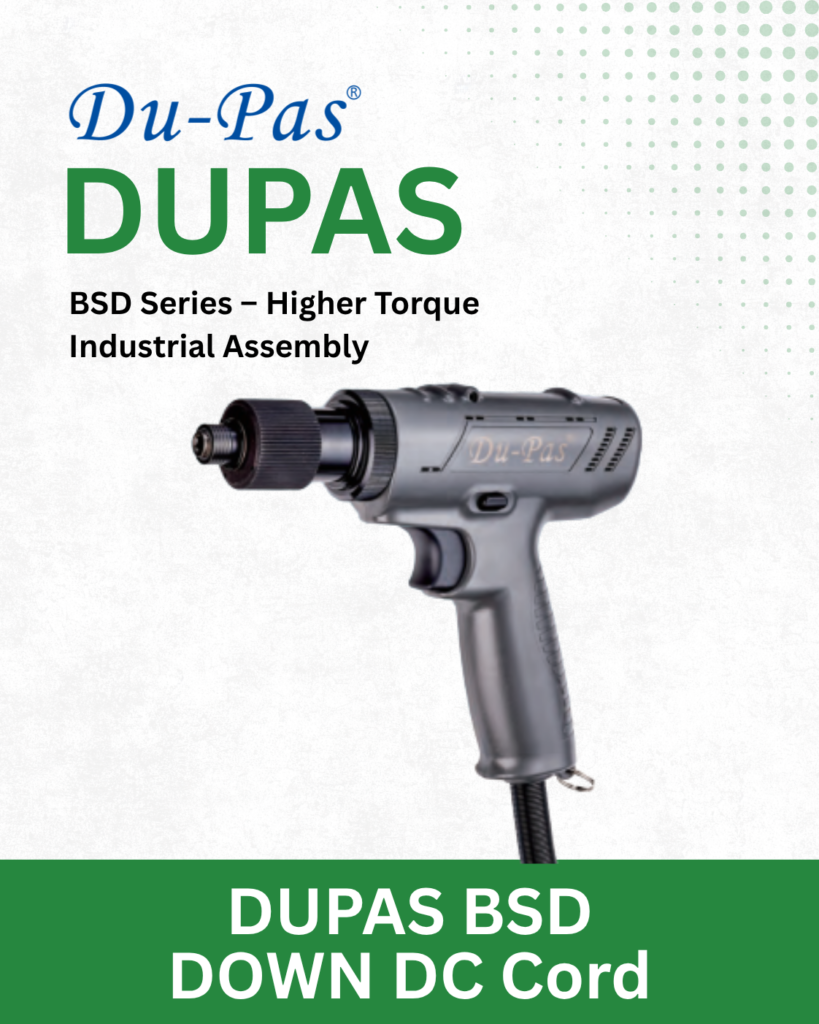
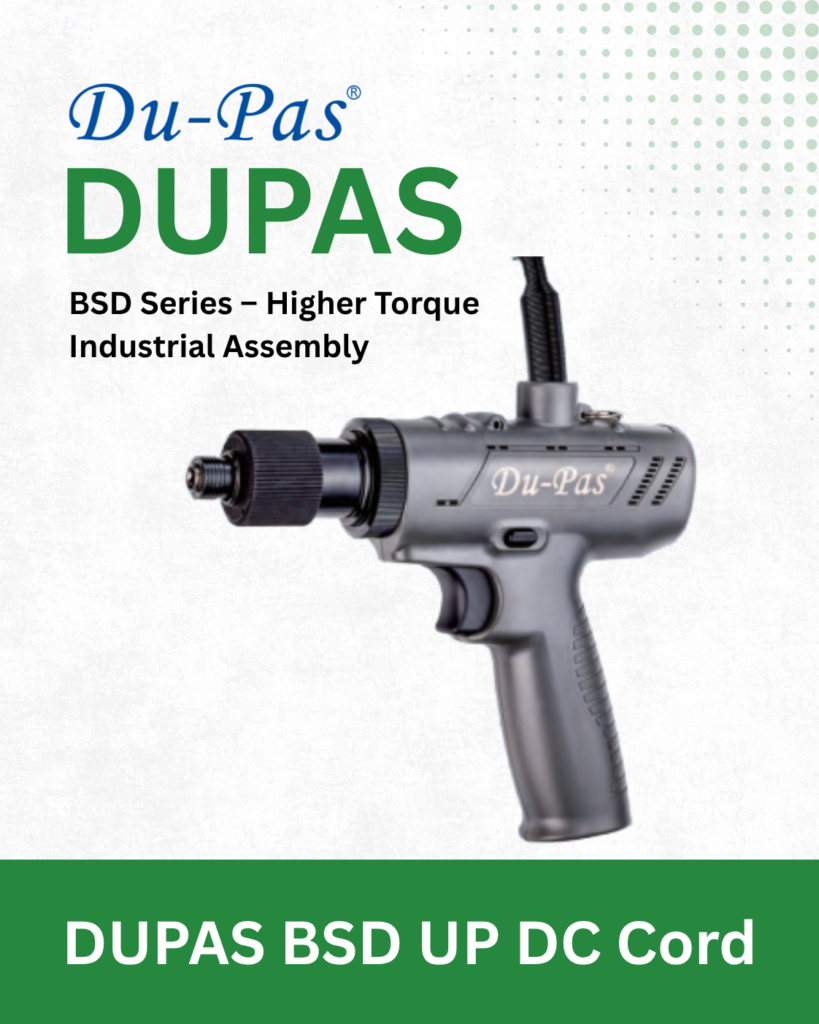
The BSD Series extends the torque range for larger screws and more demanding industrial applications.
Compared with the SSD Series, BSD models provide higher torque capacity while maintaining the same brushless motor technology, clutch shutoff accuracy, and operator-friendly design. According to the catalog, the BSD family reaches up to approximately
18 Nm, making it suitable for larger mechanical assemblies.
Typical applications include:
- Home appliances
- Automotive components
- Industrial equipment
- Metal fabrication
- Electrical enclosures
- General manufacturing
Smart Controllers for Production Management
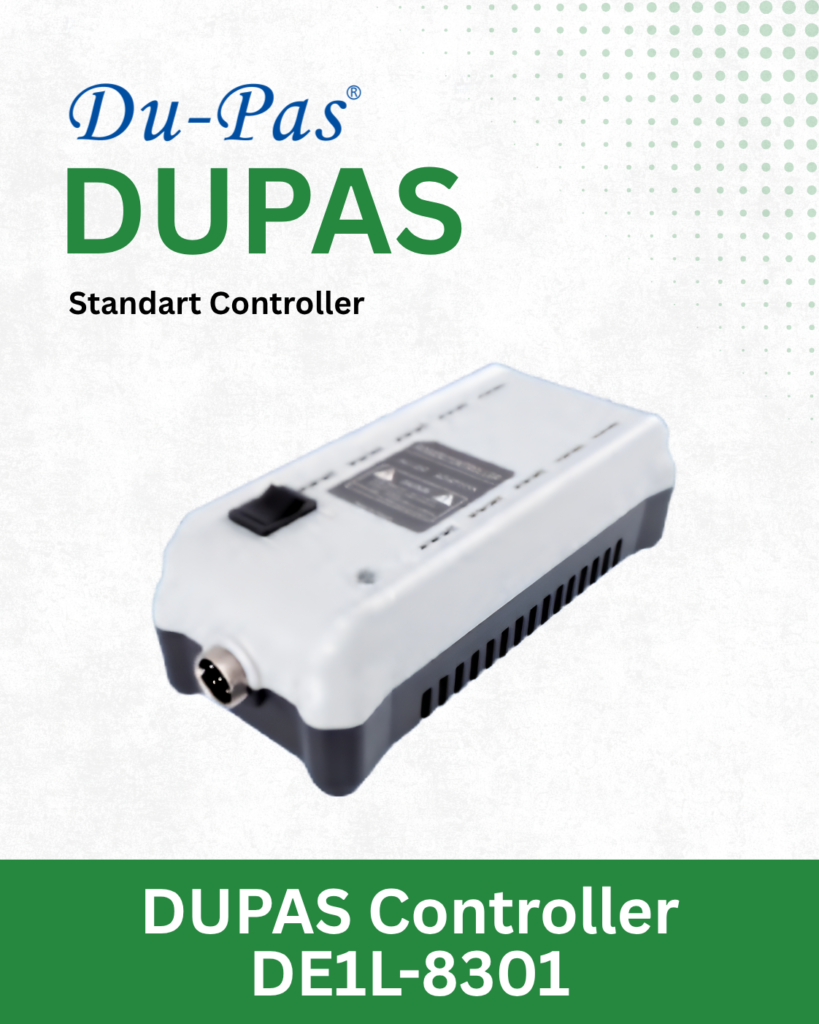
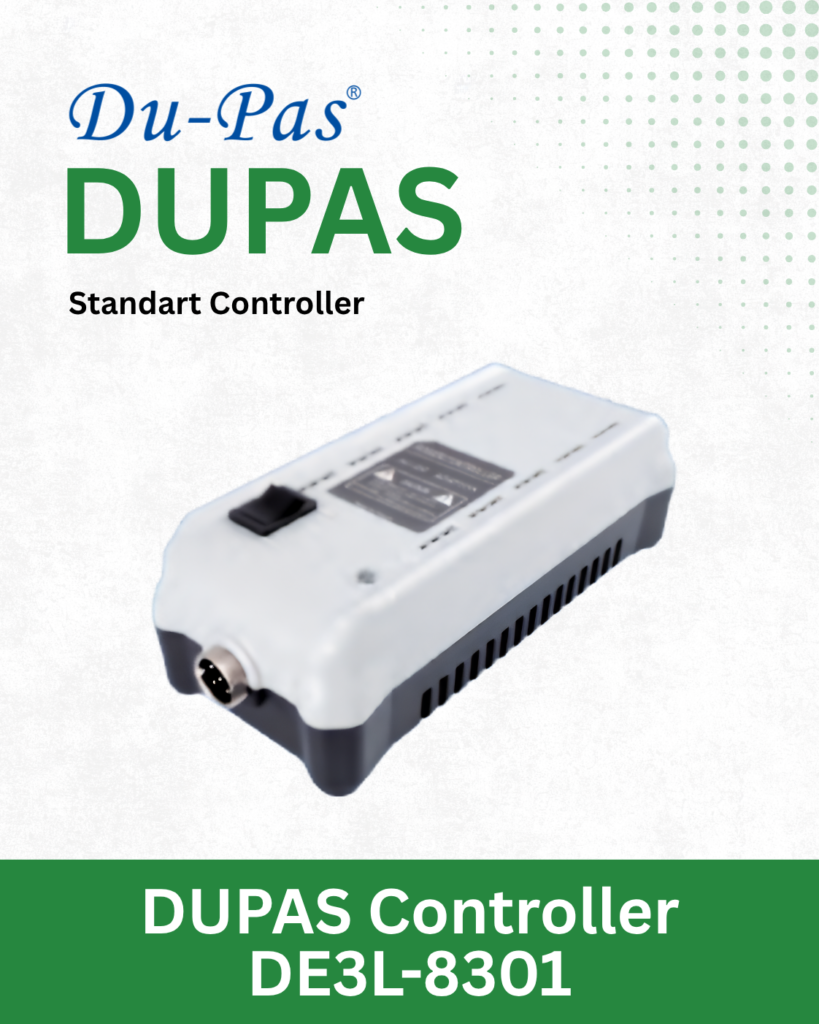
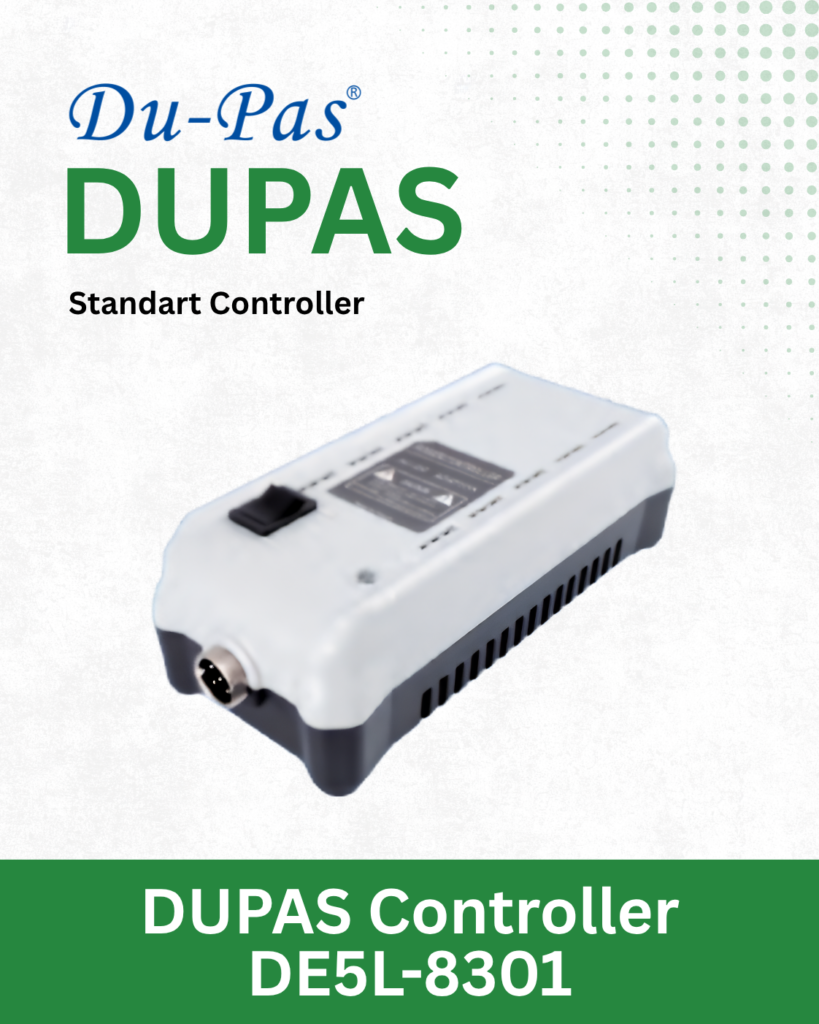
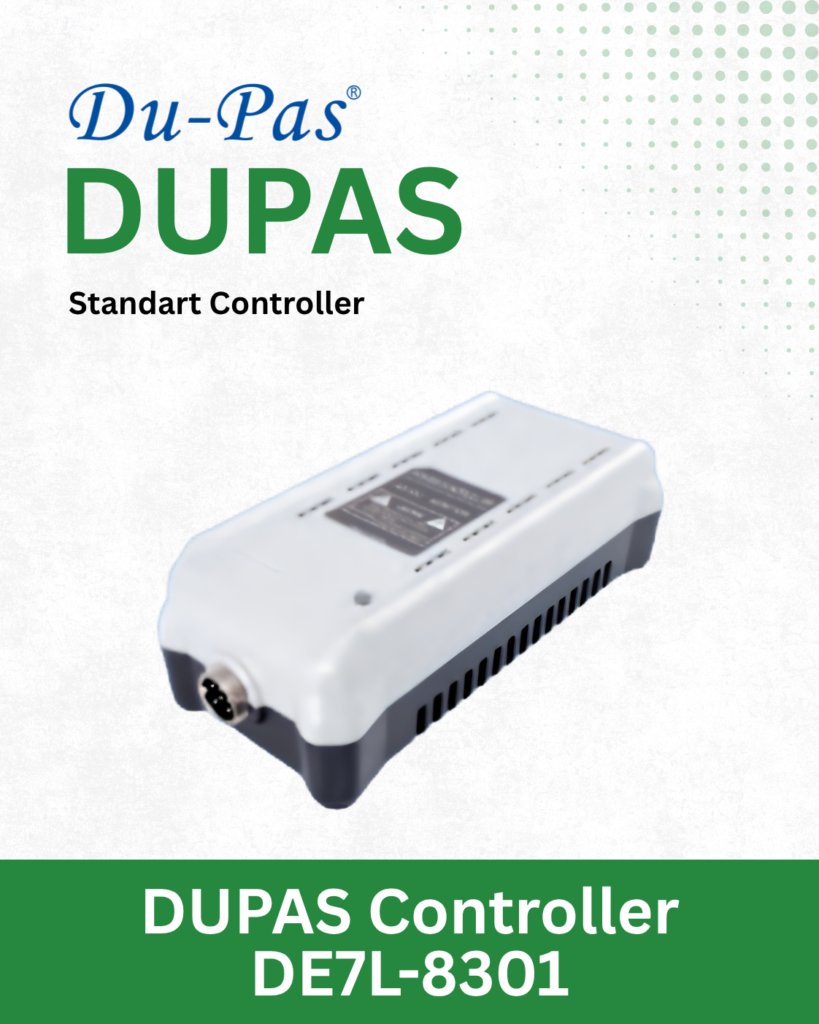
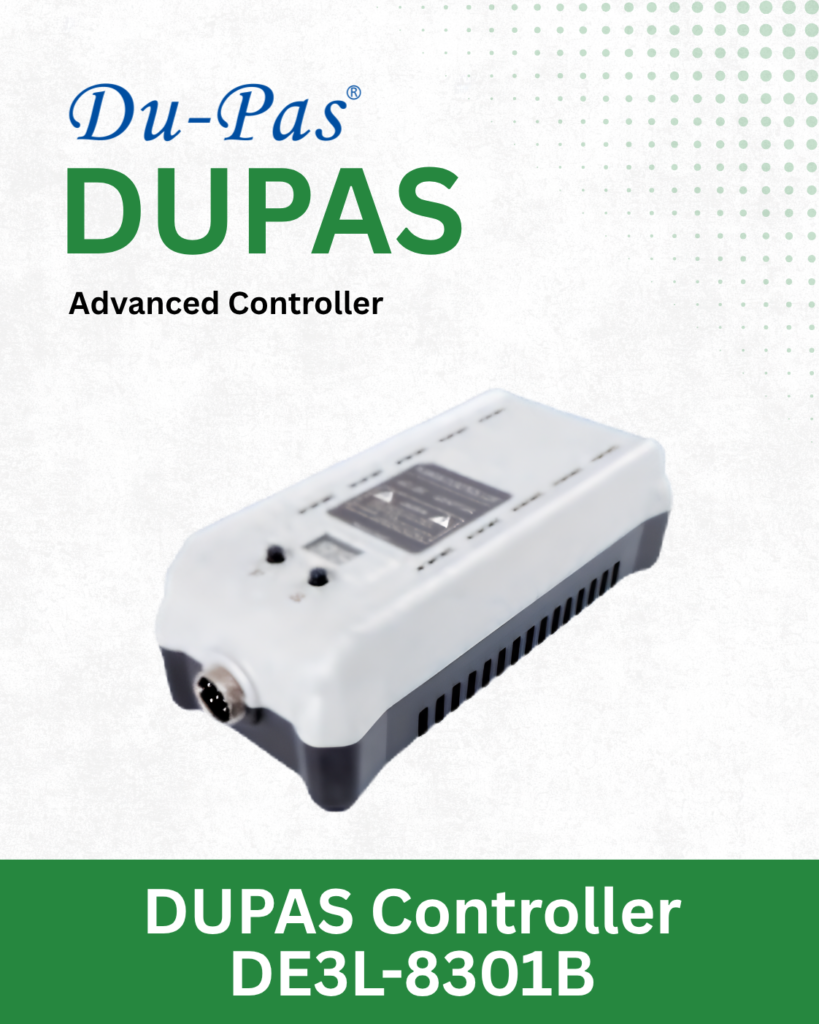
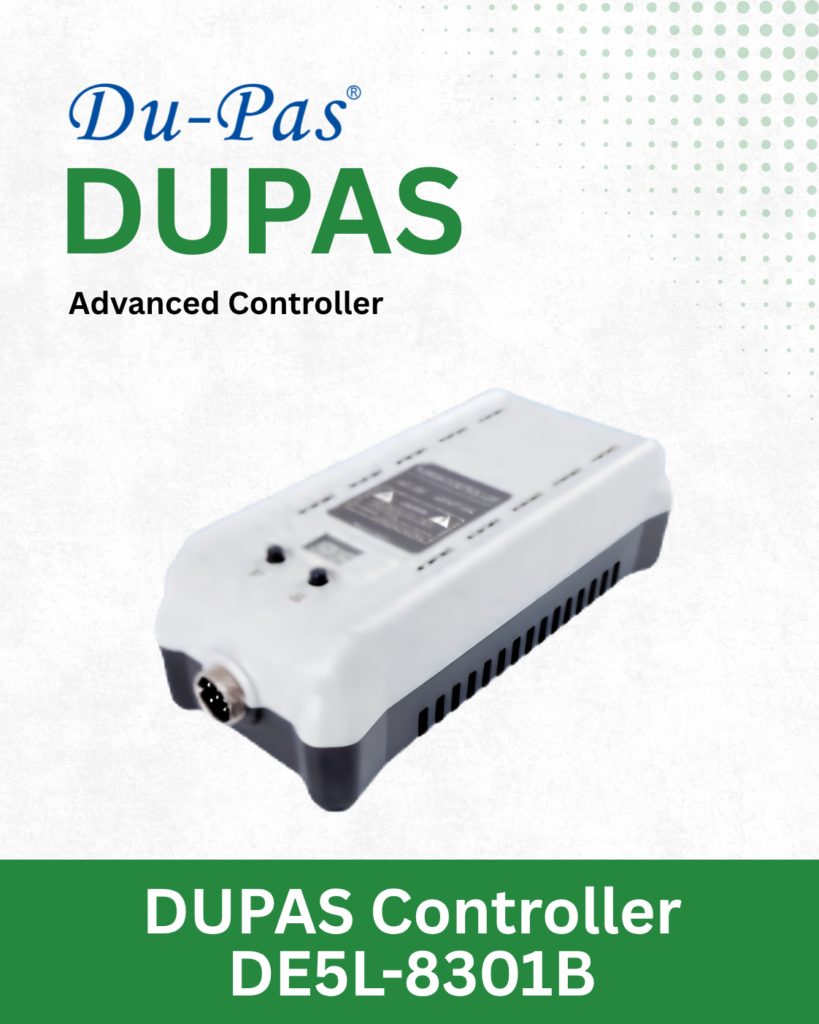
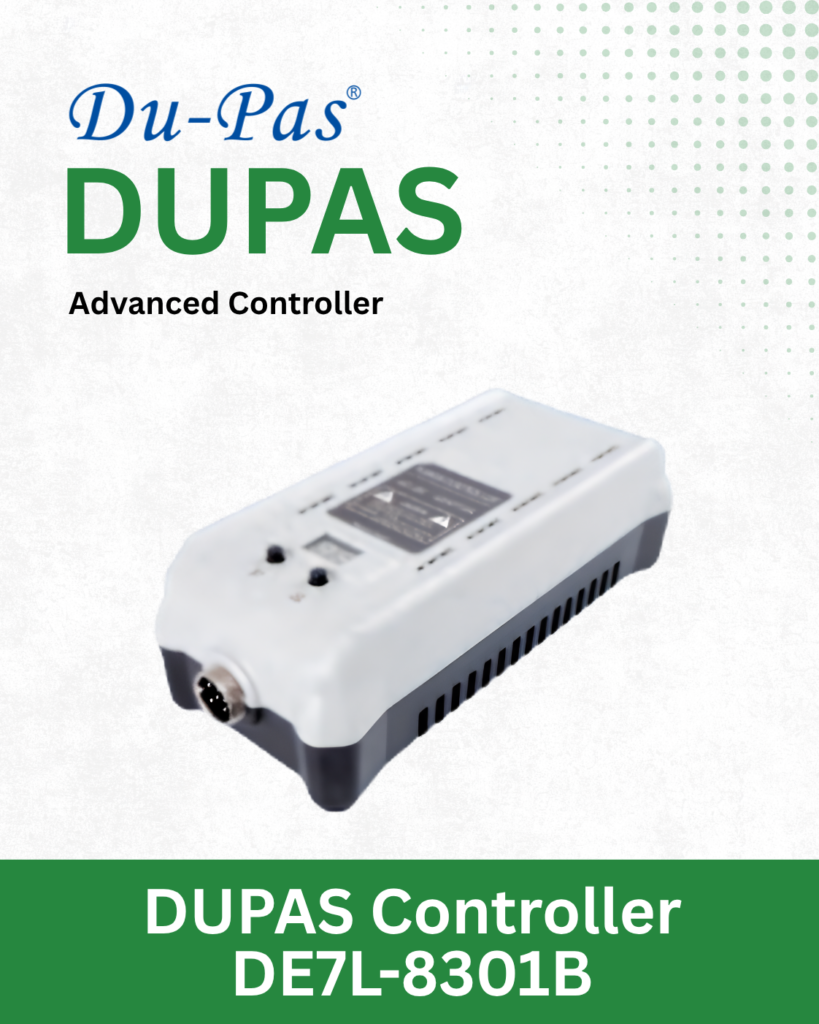
One advantage of the Dupas system is its range of intelligent controllers. Beyond supplying power, the advanced controller can provide production functions such as:
- Screw counting
- Batch counting
- OK/NOK judgement
- Tool lock function
- Programmable I/O
- Soft start
- Multiple operating modes
- External PLC integration
- Auto reverse
- Error code display
These features allow manufacturers to introduce poka-yoke functions and improve production control without upgrading to a fully transducerised tightening system.
Why Choose an Electric Shutoff Screwdriver?
Electric shutoff screwdrivers are the ideal choice when manufacturers require:
- Consistent torque with excellent repeatability
- Faster assembly than manual screwdrivers
- Reduced operator fatigue
- Clean and quiet workstations
- Low maintenance through brushless motor technology
- Simple production quality control
- Cost-effective automation of repetitive fastening
For applications requiring individual torque values, tightening curves, angle monitoring, barcode association, or complete tightening traceability, an intelligent transducerised electric screwdriver is the next step in fastening technology.
Intelligent Electric Screwdriver
Intelligent Tightening for Smart Manufacturing and Automation
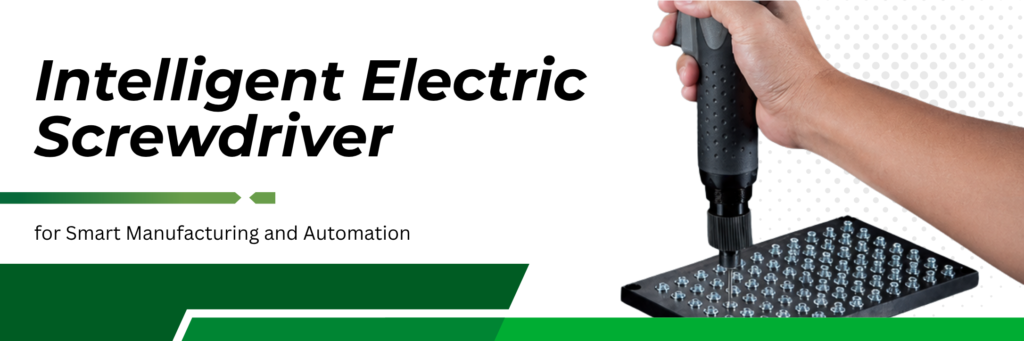
Manufacturing is rapidly moving beyond manual assembly. As factories adopt automation, robotics, and digital quality systems, fastening tools must become intelligent components within the production process. Intelligent electric screwdrivers combine precision servo control with integrated torque and angle measurement, allowing every tightening cycle to be monitored, controlled, and recorded in real time.
Unlike conventional clutch shutoff screwdrivers, which simply stop at a preset torque, transducerised tools continuously measure the tightening process and automatically adjust motor output to achieve precise fastening results. The result is superior accuracy, complete process control, and seamless integration into modern automated production lines.
Designed for Automation
One of the biggest drivers behind the adoption of transducerised screwdrivers is the growing use of automated assembly equipment.
Unlike clutch tools, transducerised screwdrivers can communicate directly with machine controllers, making them ideal for integration into:
- Automated screwdriving machines
- SCARA robots
- Collaborative robots (Cobots)
- Cartesian gantry systems
- Multi-spindle assembly stations
- Rotary indexing machines
- Custom automated production equipment
Because every tightening cycle is electronically controlled, the robot or machine receives immediate confirmation that the fastening operation has been completed correctly before proceeding to the next step. This closed-loop communication significantly improves production reliability while reducing rework and assembly defects.
Beyond Torque Control
Traditional shutoff screwdrivers provide excellent repeatability by stopping at a preset clutch setting. However, they cannot determine whether the joint itself was assembled correctly.
A transducerised screwdriver continuously monitors the entire tightening process, allowing manufacturers to detect assembly problems that would otherwise go unnoticed. The controller can evaluate parameters such as:
- Final tightening torque
- Tightening angle
- Tightening time
- Rundown characteristics
- Torque curve
- Screw seating condition
- Cross-threading
- Missing components
- Stripped threads
- Bottomed-out screws
By analysing the complete tightening signature rather than only the final torque, manufacturers gain much greater confidence in product quality.
Built for Smart Manufacturing
Modern fastening systems have become an integral part of Industry 4.0 manufacturing.
A transducerised screwdriver is no longer simply a power tool—it becomes an intelligent production device capable of exchanging information with the rest of the manufacturing system.
Typical integrations include:
- PLC control systems
- Manufacturing Execution Systems (MES)
- Quality Management Systems (QMS)
- Production databases
- Barcode and QR code scanners
- RFID systems
- Operator guidance systems
- Poka-yoke stations
This allows tightening operations to become part of a connected production environment where every fastening result contributes to quality monitoring and continuous process improvement.
Complete Tightening Traceability
For many industries, quality records are no longer optional. Every tightening cycle can be linked to:
- Product serial number
- Barcode or QR code
- Production lot
- Operator ID
- Assembly station
- Date and time
- Torque result
- Angle result
- Tightening status (OK/NOK)
This digital record provides complete traceability throughout the manufacturing process and simplifies customer audits, warranty investigations, and regulatory compliance.
Improve Production Quality
Continuous process monitoring allows abnormal tightening conditions to be detected immediately.
Typical error detection includes:
- Under torque
- Over torque
- Under angle
- Over angle
- Missing screw
- Cross-threaded screw
- Double tightening
- Incorrect tightening sequence
- Cycle timeout
- Tool malfunction
Rather than relying on end-of-line inspection, defects can be identified and corrected during assembly.
Typical Applications
Electric transducerised screwdrivers are increasingly used wherever fastening quality and automation must work together.
Typical applications include:
- Automated screwdriving machines
- SCARA robot assembly cells
- Cobot-assisted assembly stations
- Automotive production
- Electric vehicle battery assembly
- Consumer electronics
- Home appliances
- Medical devices
- Industrial automation equipment
- Precision machinery
Why Choose a Transducerised Screwdriver?
A transducerised screwdriver is the preferred solution when manufacturers require:
- Precise torque and angle control
- Real-time process monitoring
- Complete tightening traceability
- Integration with robots and automation
- PLC and MES connectivity
- Advanced error detection
- Industry 4.0 readiness
- Zero-defect manufacturing initiatives
Although the investment is higher than a conventional clutch screwdriver, it provides the process intelligence needed for today’s automated production environments. As manufacturers continue to adopt robotics and smart manufacturing technologies, transducerised fastening systems are increasingly becoming a strategic investment rather than simply an upgrade in tightening accuracy.